Peanuts, Tea and Perseverance: What China's Scholars Ate When They Crammed
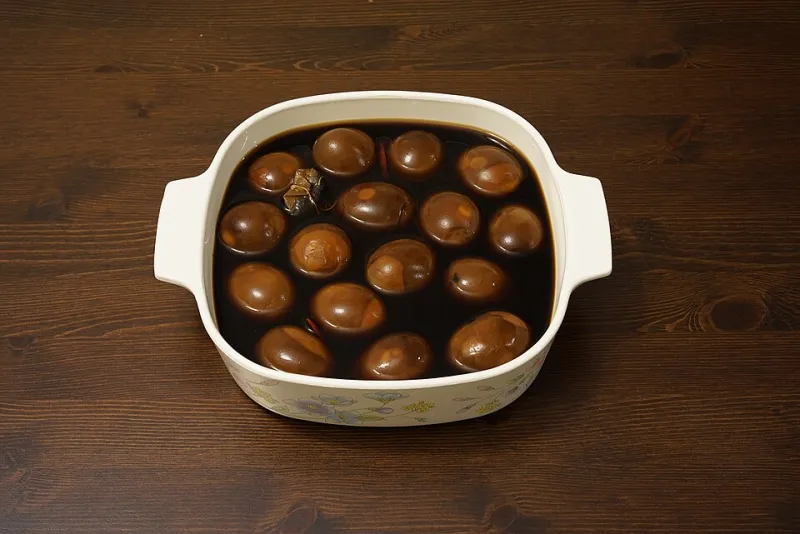
Photo: Dllu, CC BY-SA 4.0, via Wikimedia Commons
There's a particular kind of hunger that strikes around four o'clock, when the light's gone grey over the office car park and the vending machine starts whispering your name. Our name here at Shuxiang Ge — the 'scholarly fragrant house' — got us thinking: what did actual scholars eat when the studying got long? Not emperors, not generals. The poor souls hunched over texts for twelve hours a day, pen in hand, hoping to pass the imperial civil service examinations.
Turns out they had a whole desk-snack culture, and it's better than anything in a meal deal sandwich triangle.
The Original Open-Book Exam
First, some context. For roughly 1,300 years, ending in 1905, China ran its civil service examinations on a scale that makes A-levels look like a pub quiz. Candidates might spend years — decades — preparing, and the exams themselves were sat in cramped cells where some men lived for days. Success could lift a family for generations; failure was a well-documented source of poetic despair.
Food in the study wasn't an afterthought. It had to keep, not stain the paper, not send the scholar to sleep, and ideally carry some auspicious meaning. Parents still give exam-day treats with lucky wordplay attached — a whole genre of edible puns. Sound familiar, anyone who's ever been handed a 'good luck' Flump before results day?
So what was actually on the desk? Here are five we've raided from the historical record.
1. Boiled Peanuts in the Shell
The scholar's staple. Peanuts arrived in China from the Americas around the sixteenth century and were quickly embraced — boiled in their shells with salt, sometimes star anise, sometimes tea leaves. Boiling keeps them plump and gently savoury rather than roasted and dry, which matters when your throat's dry from reciting texts all day.
The modern adaptation: buy raw peanuts in shell, simmer for 40 minutes in heavily salted water with a star anise and a strip of orange peel. Drain, eat warm or cold, crack them slowly during phone meetings. They slow you down in the best way — you can't doomscroll with wet peanut shells on your hands.
2. Tea-Saturated Everything
Where a British student reaches for coffee, the Chinese scholar reached for tea — but also used it as an ingredient. Tea eggs (marbled eggs simmered in black tea, soy and spice) are the famous example, sold today from every corner shop and railway station in the country. There were also tea-infused pastries and candied nuts served alongside the pot itself.
The modern adaptation: soft-boil six eggs, crack the shells all over, then simmer them for an hour in strong black tea, dark soy, a cinnamon stick and a spoon of sugar. Keep a tub in the fridge. One egg at 3pm has more dignity than a third coffee and costs about 30p.
3. Candied Fruit and Haws
Tanghulu — skewers of fruit glazed in hot sugar syrup — are the street-food stars now, but candied hawthorn and preserved fruit have long been the scholar's palate cleanser. The sweet-tart hit cuts through fatigue the way a Wine Gum does for the rest of us, only with better provenance.
The modern adaptation: you can find dried hawthorn slices in most Chinese supermarkets (see also: our nine-jar guide to a proper store cupboard). Failing that, make a quick glacé-style mix — crab apples, plums or even cranberries dipped in melted sugar and left to harden on parchment. Warning: it is extremely easy to eat six.
4. Osmanthus and Flower-Scented Sweets
Fragrance was, fittingly for a 'fragrant house', part of the appeal. Osmanthus flowers steeped in sugar or honey perfumed jellies, rice cakes and teas. The scent was believed to clear the head — and there's decent modern evidence that strong aromas do perk up a tired brain.
The modern adaptation: a jar of osmanthus syrup from a Chinese grocer, drizzled over natural yoghurt or stirred into hot water, is the laziest luxury on this list. It's desk lunch as small ceremony.
5. Steamed Buns and Cold Rice
Not glamorous, but honest: portable starch. A steamed bun or a pressed block of cold rice with pickles kept in a cloth and eaten cold — the original packed lunch. Dumplings and bao have ancestors in exactly this kind of travel-and-study food.
The modern adaptation: frozen bao from any Chinese supermarket, microwaved and filled with whatever's in the fridge, beats a limp BLT every time. Add chilli oil. Always add chilli oil.
The Gentle Argument
We're not going to pretend a boiled peanut will transform your productivity. But there's something in the scholar's approach worth stealing: snacks that demand a little attention, that carry meaning, that turn a working break into a small ritual rather than a transaction at a self-checkout.
The meal deal is convenient. The scholar's supper is better company. During exam season — yours or your teenager's — we know which one we'd want on the desk.