The Migration Map on Your Menu: Tracing China's Regions to a British High Street Near You
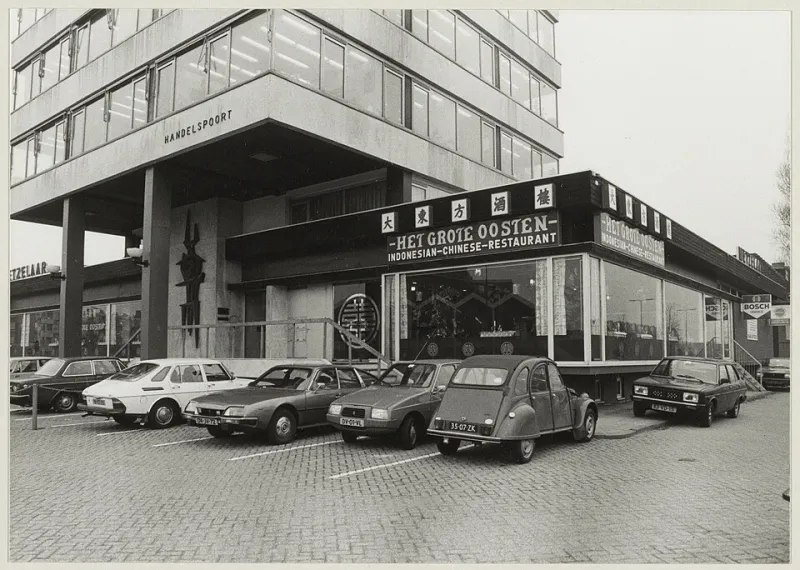
Photo: Cees de Boer, CC0, via Wikimedia Commons
Next time you're waiting for a takeaway, have a proper look at the menu. Not for what you're going to order — you know it's going to be the salt and pepper chips again — but for clues. A menu is a family photograph, really: a record of who left where, when, and what they had to do to feed themselves when they arrived.
Chinese food in Britain is often talked about as one thing, as though a sweet and sour pork ball in Glasgow and a bowl of biang biang noodles in Manchester come from the same kitchen. They don't. They come from different provinces, different decades and, often, entirely different reasons for being here at all.
The Seafarers Who Started It All
The story begins in Liverpool and London's Limehouse in the late nineteenth century, when Cantonese-speaking sailors from the Pearl River Delta — men from Hong Kong, Guangdong and the surrounding counties — jumped ship or settled in port towns. Cantonese cooking, with its emphasis on freshness, steaming and restraint, was what these early communities knew.
When Chinese restaurants began appearing in earnest after the Second World War, it was almost exclusively Cantonese food they served. Sweet and sour, egg fried rice, chow mein — these became 'Chinese food' in the British imagination because the first generation of restaurateurs came from one small corner of the country and cooked what they knew, gently adapted for palates raised on roast dinners.
That adaptation wasn't a betrayal. It was survival. A Cantonese chef in 1960s Birmingham served chicken in bright sauce because that's what kept the doors open.
The Second Wave: Students, Sichuan and Spice
Fast forward to the 1980s and 90s, and a different migration: students and professionals from mainland China, many arriving to study at universities in Manchester, Sheffield, Nottingham and London. They came from Sichuan, Hunan, Dongbei — places with ferocious climates and cooking to match.
They weren't opening restaurants at first. They were cooking at home, complaining (loudly) that nothing in Britain tasted like home. The restaurants followed when the demand did. By the 2000s, Sichuan specialists — with their málà buzz of chilli and numbing Sichuan peppercorn — began appearing in Chinatowns and, eventually, on ordinary high streets.
Hunanese cooking travelled a similar road. Often mistaken for Sichuanese by the untrained eye, it's hotter and fresher-tasting: more fresh chilli, less peppercorn tingle. Chairman Mao's home province doesn't do subtle.
Dongbei: The Newcomers from the Northeast
The most recent arrival is Dongbei food, from China's cold northeastern provinces. Dumplings the size of a fist, cumin-heavy lamb, sour cabbage stews — it's hearty winter cooking, and it's spreading fast through UK university towns, carried by a wave of students and workers from Heilongjiang, Jilin and Liaoning. If your town has a 'Dongbei Dumpling House', you're eating history that's barely twenty years old in Britain.
So What's Your Local Actually Serving?
Here's the scholarly bit — a quick field guide:
- Cantonese (the classic takeaway): Dim sum at weekends, roast meats hanging in the window, sweet and sour, wonton noodles, gentle seasoning. If there's char siu in the window, you're in Cantonese territory.
- Sichuanese: Look for mapo tofu, fish-fragrant aubergine, twice-cooked pork, dry-fried green beans and the word málà. Sichuan peppercorn is the giveaway — that tingling numbness.
- Hunanese: Red chillies everywhere, smoked meats, braised pork belly with fresh chilli rather than numbing spice.
- Dongbei: Enormous dumplings, cumin lamb, sour cabbage, noodles with meat sauce. Comfort food for minus-twenty winters.
One Country, Many Kitchens
The beauty of where we've landed is this: British diners can now eat their way across eight thousand miles of China without leaving the M62 corridor. The Cantonese takeaway your nan loves and the Dongbei dumpling bar your flatmate found are both equally authentic — they're just chapters from different parts of the same very long book.
At Shuxiang Ge, we think that's worth raising a cup of tea to. The high street didn't just get Chinese food. It got a whole library of it.