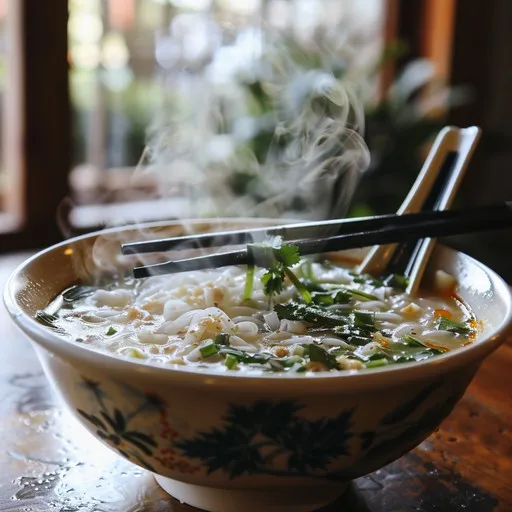
Ink, Rice and Rhyme: How China's Scholars Shaped the Food on Your Plate

Photo: Tainan City Government, Attribution, via Wikimedia Commons
The Name on the Door
If you've ever paused at our doorway and wondered what 'Shuxiang Ge' actually means, you're not alone. Roughly translated, it means 'the Pavilion of Scholarly Fragrance' — a nod to the literary salons of old China, where scholars gathered to read poetry, discuss philosophy and, inevitably, eat rather well.
That might sound like a decorative flourish, but the connection between Chinese food and the scholar class is genuinely centuries old. Some of the dishes you'll find on menus across Britain — from Manchester to Middlesbrough — were born in examination halls, imperial kitchens and the ink-stained studies of poets who took their supper very seriously.
So before your next takeaway arrives, here's a bit of context to chew on.
The Examination Feast
For over a thousand years, the imperial civil service exams were the make-or-break moment of ambitious Chinese lives. Candidates would lock themselves away for days at a time, and their families — naturally — worried about one thing above almost all others: feeding them properly.
Enter the 'zhuangyuan' dishes, named after the top-scoring candidate in the exams. Zhuangyuan and Tixue lunch rice bowls, pig trotter soups and other 'good luck' plates became part of the ritual. The logic was simple and rather lovely: if the food carried the right symbolism, the mind followed.
Even today, parents in China serve specific noodles before big exams — long noodles for long success, never cut short. It's the sort of superstition that any Brit who's ever worn a lucky jumper to a job interview will recognise immediately.
Poets at the Dinner Table
Chinese literature is stuffed with food, and not incidentally. Su Dongpo, the great Song Dynasty poet and statesman, is perhaps the best example. Exiled to Hangzhou after political trouble (a recurring theme in his life), he turned hardship into cookery — perfecting a method of braising pork belly low and slow with wine and soy sauce until it wobbled.
The dish, Dongpo pork, still carries his name some nine hundred years later. Order braised pork belly at a Chinese restaurant in the UK and you're tasting a direct descendant of that recipe. Not many British dishes can claim a poet as their inventor — though we'd happily sample a roast dinner credited to Wordsworth.
Then there's the tradition of 'drunken' dishes — chicken or shrimp steeped in rice wine — which grew out of the literati's fondness for combining drinking sessions with literary games. A bad pun at a banquet could cost you a cup of wine; a good one earned you the best morsel on the table.
Scholarly Food You Can Order Tonight
Here's the pleasant surprise: you don't need a history degree to eat like a scholar. Several dishes rooted in these traditions have become staples of Chinese menus across Britain.
Dongpo-style braised pork belly — rich, melting, faintly sweet. Best with plain steamed rice, because the sauce is the star.
Long-life noodles — hand-pulled or wheat-based, served uncut. Scholars ate them for luck; students in the UK now order them before exam season for exactly the same reason.
Claypot rice — the humble scholar's one-pot supper, cooked slowly and finished with a crisp, caramelised base. Think of it as the ancestor of the student's one-pan pasta, only considerably older and better.
Drunken chicken — chilled, silky and infused with Shaoxing wine. Proof that the literati knew how to have a good evening.
Egg fried rice with century egg — the preserved egg's ammonia-kicked depth was once a delicacy debated in essays. Now it's a weekend treat in a foil container.
Why It Matters
There's a temptation, when food travels as far as Chinese cuisine has travelled, to flatten it into convenience — a Friday night default, ordered and eaten without much thought. But every dish on a proper Chinese menu carries a story: of exiles and exam candidates, of poets who cooked better than they governed, of families who believed a well-fed scholar was a successful one.
At Shuxiang Ge, that's the spirit behind the name. When your order arrives, you're not just having dinner. You're joining a very old conversation — one that's been running for a thousand years, conducted in ink and soy sauce in equal measure.
Bring an appetite. Bring a bit of curiosity. The scholars would have insisted on both.