Put the Lager Down: A Short History of Tea at the Chinese Table
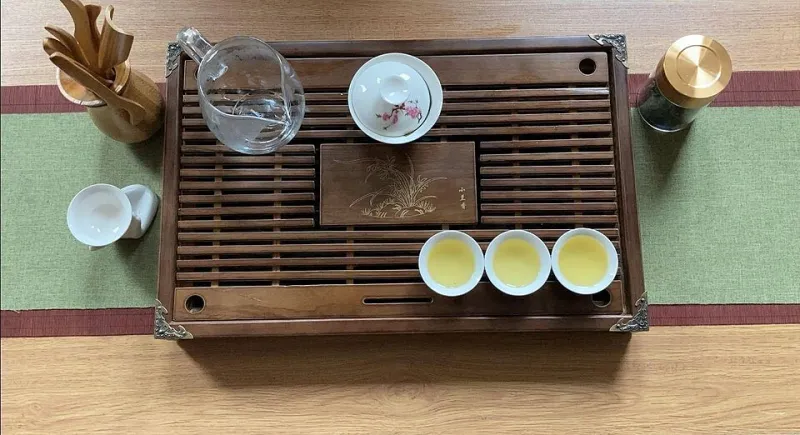
Photo: Il lupa, CC BY-SA 4.0, via Wikimedia Commons
Here in Britain we're a nation of tea drinkers, so it's odd that when we sit down to a Chinese meal, the teapot mysteriously disappears and a can of lager appears in its place. In China, this would be a curious reversal. Tea isn't just a drink there — it's the oldest and most respected member of the dinner table, with a pedigree stretching back well over a thousand years.
The Drink of Scholars
Tea and scholarship have been entwined in Chinese culture since the Tang dynasty, when the writer Lu Yu produced The Classic of Tea — essentially the world's first single-subject food book, and a reminder that taking your brew seriously is a very old habit indeed. Scholars and poets drank tea to stay alert through long nights of study; monks drank it to stay awake through meditation. It was the original study aid, the caffeine of the literati.
At the dining table, tea earned its place for more practical reasons. It cuts through grease, refreshes the palate between rich dishes, and — crucially — it's a gesture of hospitality. In Cantonese restaurants to this day, your pot arrives before you've finished sitting down, and you'll see diners tap two bent fingers on the table when someone refills their cup. That little tap is said to recall a story of a disguised emperor whose grateful companions couldn't kowtow in public, so they 'bowed' with their fingers instead. Every refill is a small ceremony, whether you knew it or not.
Why Tea Beats Lager with Duck
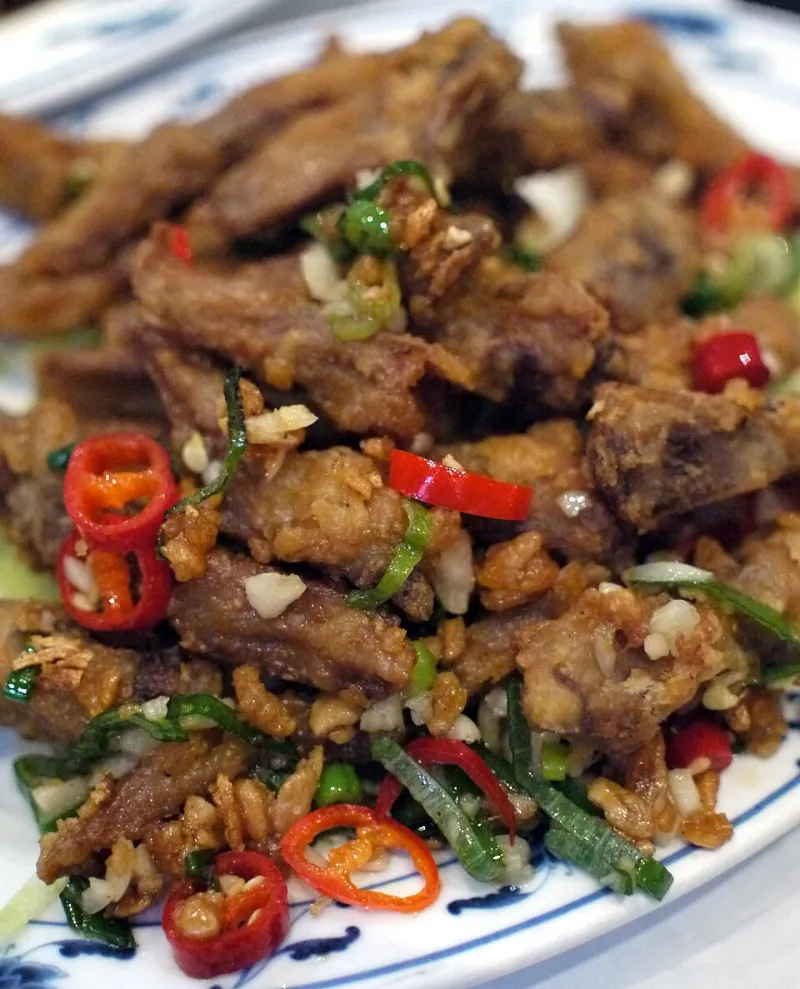
Crispy duck, ribs, anything glossed in a sticky sauce — these are rich, fatty, glorious things. A cold lager washes over them and mostly gets in the way. Tea, particularly the darker varieties, does something more interesting: it scrubs the palate clean so every bite tastes like the first.
Pu-erh, the fermented tea from Yunnan, is the traditional partner for exactly this reason. It's earthy, deep and almost savoury, and Chinese diners have long considered it the antidote to a heavy, oily meal. There's a reason tea houses in Guangdong serve it alongside the fattiest dim sum imaginable.
Your At-Home Tasting Flight
You don't need a ceremony or special kit — a teapot, a mug and an hour will do. Try these three alongside your next takeaway:
Jasmine green tea — delicate and floral. Best with lighter dishes: steamed dumplings, prawn toast, anything delicate. Brew at around 80°C, not boiling, or it turns bitter.
Oolong — the great middle ground, somewhere between green and black, with a toasty, almost creamy character. Brilliant with stir-fries and noodles. Re-steep the same leaves two or three times; oolong rewards patience.
Pu-erh — dark, earthy and robust. This is your crispy duck tea. Brew it strong with fully boiling water and let it stand up to the richest thing on the table.
Where to Buy in Britain
The good news is that loose-leaf tea has quietly become easy to find. Most Chinese supermarkets — Wing Yip in Birmingham and Croydon, Loon Fung in London, or your local independent — stock jasmine pearls, oolongs and pressed pu-erh cakes at very reasonable prices. High street tea shops like Whittard and T2 carry solid oolong and jasmine options, and online specialists such as Postcard Teas or Comins Tea will post proper single-origin leaves anywhere in the UK. Skip the teabags labelled 'green tea' that taste of nothing; whole leaves cost little more and taste enormously better.
So next time the takeaway arrives, put the kettle on properly. Brew something dark and honest, pour a cup, and tap two fingers on the table if anyone refills it. A thousand years of scholars would approve.