A Small Plate of Sunshine: The Quiet Ceremony That Ends a British Chinese Meal
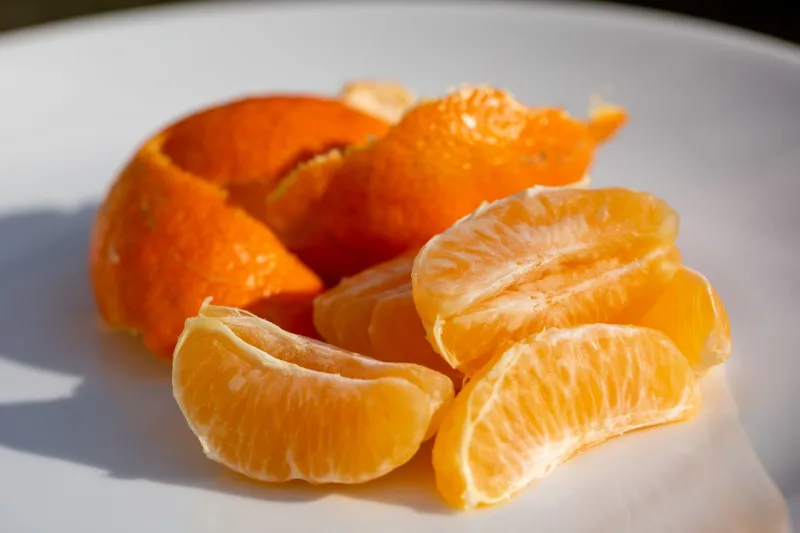
The plates go. The soy-slicked dish that held the special chow mein is stacked on the edge of the table. Someone is doing the thing where they count out cash into a little black tray, and someone else is insisting they shouldn't. And then, without anyone asking, a small plate lands in the middle of the table: four or five segments of orange, cut through the peel, cold from the fridge, sitting there like a small act of kindness.
Nobody mentions it. Nobody ever does. It is the only course in British restaurant-going that arrives entirely without ceremony, without a menu entry, and without a single word of introduction — and yet a Chinese meal in this country feels faintly incomplete without it.
The last thing on the table, the first thing forgotten
Ask anyone to describe a British Chinese takeaway or restaurant meal and they'll list the prawn crackers, the ribs, the lemon chicken, the singapore noodles. The orange rarely makes the list, even though practically everybody has met it. That's the strange status of a genuine ritual: so familiar it has become invisible, filed away as an afterthought rather than a course.
It is worth saying plainly what it is. It is fruit, served at the end of a savoury, salty, sometimes heavily sauced meal, at no extra cost, usually on whatever plate was nearest. Sometimes it comes with a couple of lychees. Occasionally it arrives alongside those small tubs of ice cream with the flat wooden spades, and the two sit together in companionable silence, neither quite upstaging the other.
Why an orange, and why at the end?
Fresh fruit as a closer is standard practice across southern China, and the Cantonese tradition in particular. Where a European kitchen might reach for sugar, cream or chocolate, the instinct in Guangzhou is often to reset the palate rather than flatten it. After a meal high in salt, oil and fermented flavour, cold, juicy, sharp-sweet fruit does something that a mint simply cannot: it lifts rather than masks.
The Cantonese-run restaurants that established themselves in British cities from the 1950s onwards brought that habit with them, and it survived the journey better than most things did. Think about what it had going for it. It was cheap. It was fast. It required no kitchen space, no skill beyond a knife. It worked for a table of two and a table of twelve. And it was, in the quiet way that matters, generous — a gift from the house rather than a line item on the bill.
That last point is the one worth dwelling on. In a trade built on tight margins, handing over something nobody pays for is not a small gesture.
Luck, in a peel
The orange carries weight in Chinese culture that a British diner might not clock. Oranges and mandarins are bound up with fortune and prosperity — the Mandarin chéng sits close to the sound of chéng, to accomplish or succeed, while tangerines are associated with luck and good fortune generally. At Lunar New Year, small trees of them appear in supermarkets here in the UK, and it is customary to arrive at a friend's door with a pair of mandarins in hand.
So ending a meal with orange is not merely a palate-cleanser. It is a small wish for the people at the table. Eat well, go home lucky. The fact that most British diners receive this wish without knowing it is, to my mind, rather lovely — a blessing delivered in a language the recipient doesn't speak.
A mint by any other name
Comparisons with the British after-dinner mint are inevitable and mostly unfair to both parties. The mint — the foil-wrapped square, the chocolate-coated disc, the glacier mint rattling in a dish by the till — is a breath-freshener and a full stop. It says: the meal is over, and here is a small courtesy on your way out.
The orange says something slightly different. It says: the meal is over, and here is something to send you off in good condition. One is a piece of confectionery. The other is food. Where the mint closes the door, the orange walks you to it.
It is also more honest about the shape of a Chinese meal. That style of eating is not built around a crescendo, a pudding, a moment of sweet climax. It runs long and level, a series of shared dishes rather than a narrative with a climax. A heavy dessert would land badly after all that. A segment of cold orange lands perfectly.
What the fruit is actually doing
There is an unglamorous practicality here too, and we should not pretend otherwise. Front-of-house staff need a signal that the table has moved from eating to paying. A plate of fruit is that signal, and it is warmer than a card machine waved from three feet away. It also gives a table something to do with their hands while they wait for the bill, which in a busy restaurant on a Saturday night is no small service.
And then there's the memory. Ask anyone who grew up in a British town with a Chinese restaurant on the high street what they remember about the end of the meal — not the meal itself, the end of it — and the orange will come up. Sometimes with the mint. Sometimes with the warm towel. Always with the sense that the evening had been properly concluded.
Pay attention, next time
So here's a modest proposal. Next time you eat Chinese food in this country, whether it's a takeaway spread on your own coffee table or a proper sit-down with a lazy Susan, notice the fruit. Notice that it was cut for you. Notice that no one charged you for it, and no one expected thanks.
At Shuxiang Ge we are fond of the small, half-hidden customs that make this cuisine what it is in Britain — the ones that survive not because anyone markets them but because they work. The orange at the end works. It has worked for decades, quietly, on ten thousand tables.
Eat the segments. They were cut for you. That's the whole ceremony, and it's quite enough.