The Lights Left On: A Christmas Day Takeaway in Britain
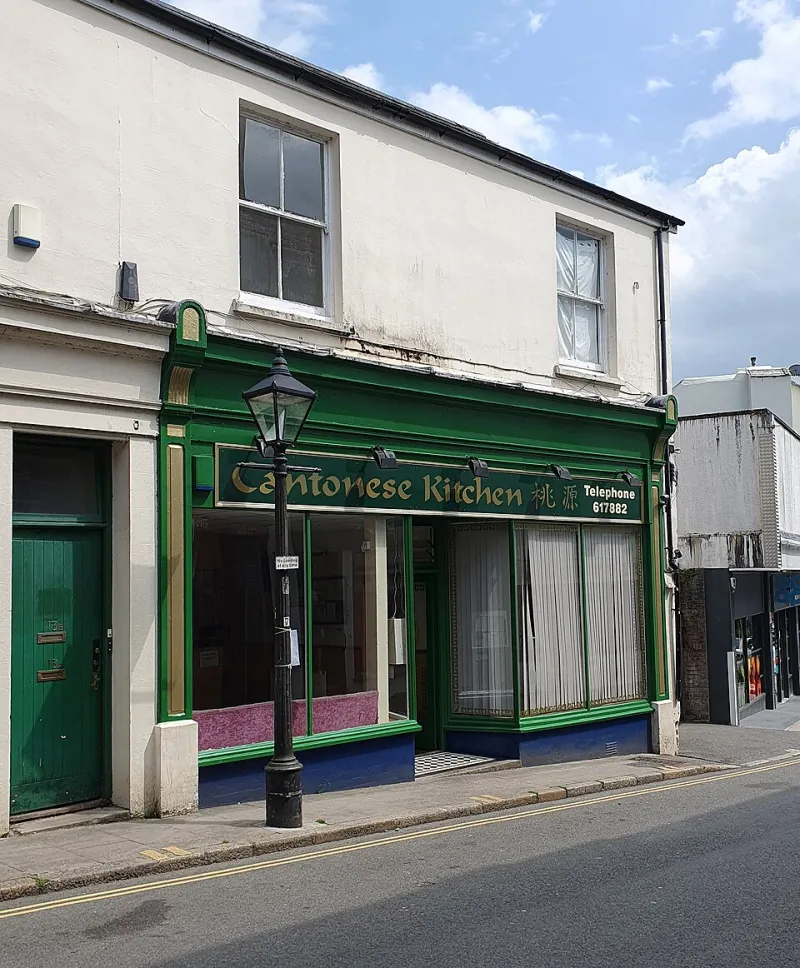
Photo: Mutney, CC BY 4.0, via Wikimedia Commons
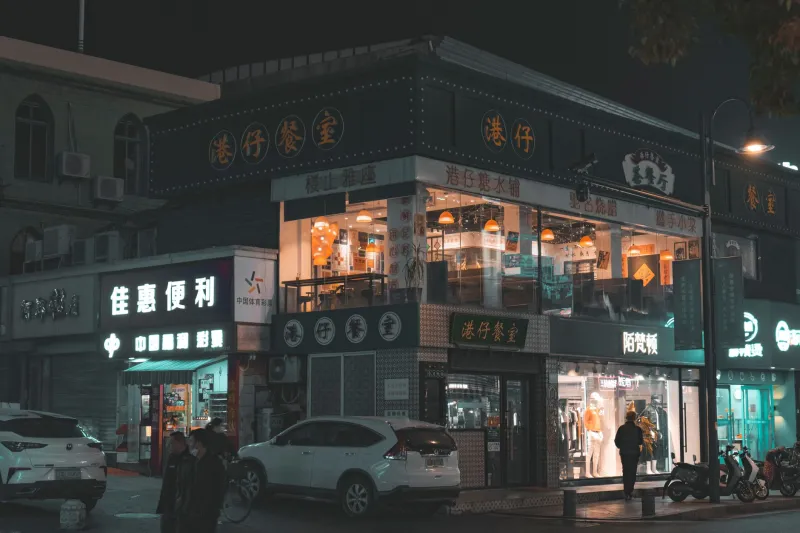
By four o'clock on Christmas afternoon, most British high streets have the look of a stage after the audience has gone home. Shutters down, car parks empty, a lone paper cup rolling past a pharmacy. But walk a few streets further, or scroll past the usual festive recipes, and you will find a different scene: a Chinese takeaway with the lights on, the extractor fan humming, and a queue of people who have decided that Christmas dinner does not have to involve a bird.
The Christmas Day Chinese takeaway is not a punchline. It is a rota, a shopping list, a set of family negotiations and a quiet piece of British food history. At Shuxiang Ge — a scholarly house of Chinese flavour, if you will — we tend to think the menu is worth reading as closely as any text. On 25 December, that text gets a little more interesting.
The Menu Is Smaller Than You Think
A takeaway that opens on Christmas Day is rarely running its full hundred-item menu. Owners are practical people. They know that a skeleton crew, a shortened service and a public holiday do not mix well with twelve pages of options. What tends to survive is a tight, reliable list: roast duck, noodles, salt-and-pepper chips or prawns, mixed vegetables, curry sauce, spring rolls, prawn crackers, maybe a tofu dish for the vegan cousin everyone forgot to ask about.
Tofu is not there as a joke or a concession. It is there because it travels well, reheats without turning to rubble, and fits the sort of order that a mixed household actually places. The same goes for a simple braised aubergine or a dry-fried green bean. These are dishes that hold their shape in a foil container and do not demand a carving knife.
What you will not often see is a full Christmas dinner with a Chinese accent. The wok is not built for a crown of turkey. A kitchen that has spent the year perfecting a dark, glossy sauce is not going to abandon it on the one day when the country expects gravy. The point is not to recreate the traditional British feast. The point is to avoid it, or at least to offer an alternative that feels deliberate rather than defeated.
Prep Begins on Christmas Eve
For the people behind the counter, Christmas Day is the end of a longer process. Christmas Eve is for chopping, par-cooking, reducing sauces and checking that the rice pots are clean. Staff rotas are agreed weeks in advance. Some kitchens close at eight or nine on Christmas night; others stop taking orders once the pre-orders hit a number they can actually cook.
That pre-order habit matters. A Christmas Day takeaway is not usually a spontaneous craving. It is booked in advance, often by phone, sometimes by a customer who has been coming to the same shop for fifteen years. The order is written down, repeated back, and in some families argued over for a week. One person wants duck, another wants curry, someone else insists on chips. It is a small, domestic negotiation conducted through a takeaway menu.
Delivery drivers are harder to find on 25 December, so many shops switch to collection only. That changes the rhythm. People arrive on foot, in coats, carrying bags. There is a particular kind of Christmas Day pavement scene: a teenager holding a carrier bag of foil containers while a parent counts change under a streetlamp. It is not glamorous. It is, however, unmistakably British.
The Families Who Order
It would be easy to assume that everyone ordering on Christmas Day is doing so because they cannot cook, or because they are lonely. Some are. But the reasons are broader. There are NHS workers finishing a shift and going home to a flat where nobody has preheated an oven. There are small households where a full turkey would be absurd. There are mixed-faith families, mixed-diet families, and families where two people are not speaking to a third and a sit-down roast feels like a diplomatic incident waiting to happen.
There is also the simple matter of rest. For someone who has spent December cooking, hosting and organising, a Christmas Day takeaway can be an act of self-preservation. The meal arrives hot. The washing-up is minimal. Nobody has to pretend to like Brussels sprouts.
In recent years, delivery apps have made the Christmas Day order easier to place, but they have not made it less deliberate. If anything, the shops that stay open have become more visible. A customer in Manchester can see a kitchen in a nearby suburb is taking orders; a family in Birmingham can compare set meals for four. The technology is new. The instinct — find someone who is open, order enough, eat together — is not.
The Owners' Own Christmas
There is a temptation to tell the story of the Christmas Day takeaway as a story of sacrifice. The owners work while everyone else rests; the family celebrates late; the children grow up around foil containers. Some of that is true. But it is not the whole picture.
Many British Chinese families have their own version of the day. The big meal might happen on Boxing Day, or on the 27th, or on a Sunday in early January when the shop is closed and nobody is rushing. Christmas, in a family that runs a business, is often a movable feast. The turkey, if there is one, might appear on a different date. The important thing is that it appears at all.
Owners also balance service with their own celebrations in practical ways. One parent works the front counter while another cooks; older children help with packing; a grandmother makes sure everyone eats something before the rush. The shop is not separate from the family. It is another room in the house, with a bigger fridge.
A Tradition Worth Taking Seriously
British Chinese food has always been a story of adaptation. Dishes arrive, change, settle and become local. The Christmas Day takeaway is part of that same story. It takes a British ritual — the big meal on 25 December — and quietly rewrites the script. Not with a grand statement, but with a pre-order, a set meal for four, and a bag of prawn crackers on the passenger seat.
That is worth taking seriously. It is not a betrayal of Christmas, and it is not a novelty. It is what tradition looks like when it lives in a mixed household, a small flat, a shift pattern or a family that has decided to do things a little differently this year.
So if you are ordering this Christmas, order early. Be patient when the phone is busy. Collect on time. Tip if you can. Somewhere a kitchen is keeping its lights on, and the least the rest of us can do is appreciate the food, the effort and the quiet insistence that Christmas dinner can come in a foil container.