Legend Versus the Ledger: The 'Chinese' Traditions That Were Invented on the Way to Britain
There's a particular pleasure in the small rituals of a Chinese takeaway in Britain. You crack open a biscuit at the bottom of the bag. You poke at the dark green shreds hiding under your chow mein. You order, without thinking, a portion of chop suey that your nan swears by.
Here's the scholarly bit, though: none of it is Chinese. Not one of those traditions exists in China — or rather, didn't, until Chinese emigrants started inventing them for us.
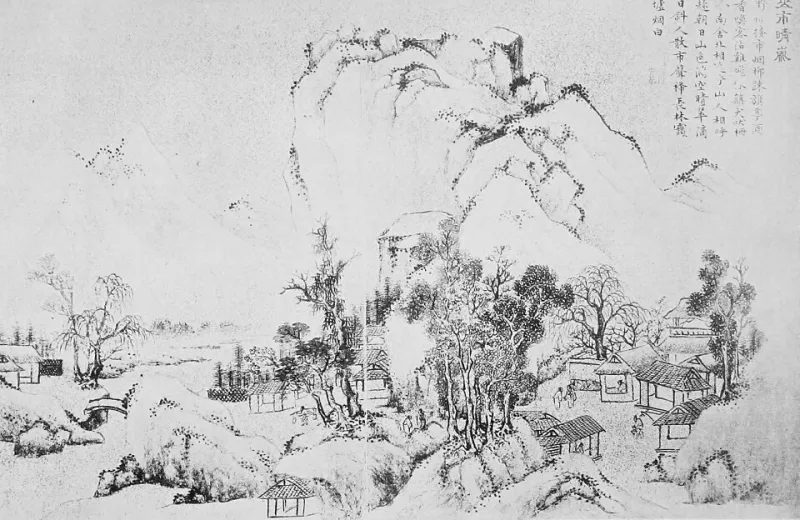
Now, before anyone feels cheated, let's be clear about the framing. In the old scholars' studios of imperial China, the whole game was separating legend from record. A good literatus didn't take a story at face value; he checked it against the ledger. So let's do exactly that, with three of the most beloved myths on the British menu.
The Biscuit That Isn't
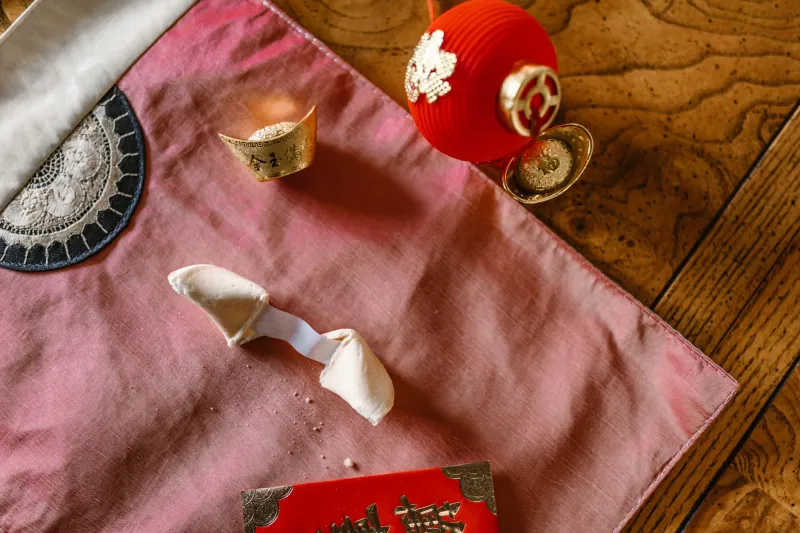
The fortune cookie is so thoroughly welded to the Chinese restaurant experience that its absence is genuinely disorienting. But walk into a restaurant in Beijing or Chengdu and ask for one, and you'll get a blank stare — or, if you're lucky, a novelty packet marketed to tourists.
The trail leads elsewhere entirely. The likeliest ancestor is a Japanese cracker, tsujiura senbei, folded around hidden paper notes and sold near Kyoto's shrines. Japanese bakers brought versions of it to California in the late nineteenth century, and somewhere in the mix of American Chinatowns — several families and a couple of cities claim the credit — it was adopted, sweetened and rebranded.
By the Second World War, American GIs encountered them in Chinese restaurants and assumed they'd always been there. The myth crossed the Atlantic with the takeaway trade, and now the fortune cookie is as British as paying extra for prawn crackers.
The Cabbage That Isn't
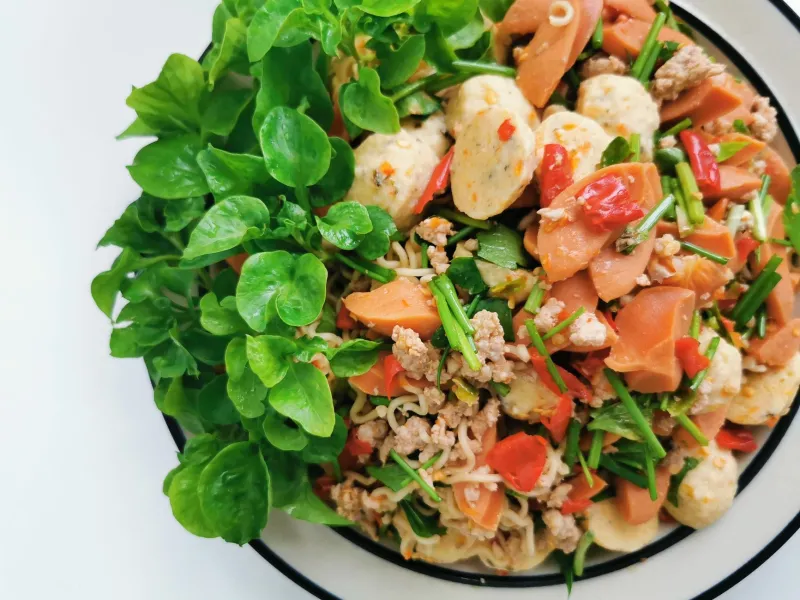
Crispy seaweed. Dark, glistening, sweet-salty, scattered over everything. It's a fixture of British Chinese menus — and it is, almost always, not seaweed.
The real story is a masterclass in culinary sleight of hand. What you're eating is cabbage, usually spring greens or savoy, fried until it shatters, then tossed with sugar and salt. Some versions use actual dried seaweed powder for flavour, but the bulk of the dish is firmly a brassica.
It's worth pausing on how clever this is. A vegetable that's cheap, available in any British market and keeps for days gets transformed, through one bit of frying technique, into something that tastes of the sea. That's not fakery. That's cookery — the same instinct that gave us bubble and squeak.
The Dish That Went Home
Chop suey has the strangest journey of the three, because it's the one that actually made it back to China. The dish — a loose stir-fry of meat, bean sprouts, egg and whatever else was to hand — almost certainly emerged in California in the mid-1800s, cooked by Cantonese labourers working with unfamiliar ingredients and homesick palates.
The name is Cantonese: tsap seui, roughly 'odd bits' or 'mixed scraps'. It was never a dish so much as a method — use what you've got. But American diners treated it as an exotic specialty, demand exploded, and 'chop suey houses' spread across the continent.
Then came the twist. When the dish eventually travelled back to China, it did so as a curiosity — something hotels served to foreign visitors who'd heard of it. A Chinese invention for foreigners, returned home as a foreign delicacy. You couldn't script it.
Why the Ledger Matters
It's tempting, having learned all this, to feel a bit deflated. The myths were myths all along.
But think about what these dishes actually are: a record of survival. When migrants arrived in Britain — largely from Hong Kong's New Territories in the 1950s and 60s — they cooked with what British shops sold, for British appetites, on British budgets. Crispy seaweed made cheap greens taste luxurious. Sweet-and-sour sauce met a national palate raised on ketchup. The menu wasn't a degraded copy of Chinese food; it was an honest ledger of two cultures negotiating at the counter.
The old scholars understood this. A record isn't less true for being written in a hurry, in a foreign land, by someone working a twelve-hour shift. It's just a different kind of history.
Read the Menu Like a Researcher
So next time you're waiting for your order, try a little textual criticism of your own:
- Spot the adaptations. Chips on the menu, salt and pepper everything, curry sauce on the side — these are the marginalia of migration.
- Ask what's underneath. Half the 'exotic' dishes hide something ordinary and brilliant, like a cabbage pretending to be seaweed.
- Honour both books. Order the authentic regional dish and the chicken ball. The ledger records both.
The fortune cookie's message, it turns out, was never inside the biscuit. It was the whole restaurant: a story of invention, adaptation and quiet genius, written in batter and bean sprouts, one British high street at a time.