What's in a Sign? The Quiet Ambition Behind British Chinese Takeaway Names
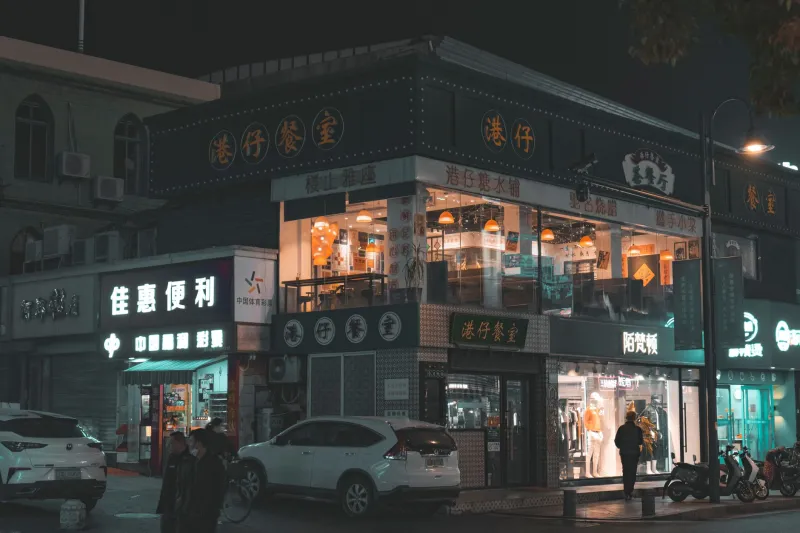
Walk down almost any British high street and you will find them: bright signs, neat lettering, a dragon curled around a font. The names are familiar enough to feel invisible. Golden something. Lucky something. House, Garden, Palace. But a takeaway name is rarely random. It is a compressed biography, a business plan and a little act of poetry, all squeezed onto a lightbox above a door.
At Shuxiang Ge, our own name leans into that idea. Roughly, it suggests a house of bookish fragrance — a scholarly pavilion, a place where scent and study meet. It is not the sort of name that shouts for attention. It asks you to lean in. And that is only one way of doing things on a British high street, where the sign above a Chinese takeaway can tell you plenty before you have even seen a menu.
The dragon is not just a dragon
It is tempting to read names like Golden Dragon or Lucky House as generic. In one sense they are: they are built from a shared vocabulary that travels well. But generic does not mean empty. In many Cantonese business traditions, auspicious words are practical. Gold suggests prosperity. Red suggests good fortune. A dragon carries power and celebration. A phoenix brings balance. Jade, pearl, lotus and garden all point towards something precious, growing or well kept.
For families setting up shop in a new country, those words also do a quiet job of translation. They say: this is a place of welcome, celebration and good things to eat. They are easy to remember and easy to say. A name like Lucky House does not promise that every meal will change your life. It promises a certain mood — generous, familiar, open late. That is a form of hospitality in itself.
House, Garden, Palace: the vocabulary of welcome
Then there are the words that build the place: House, Garden, Palace, City, Inn, Kitchen, Cottage. Some are grand. Some are modest. Some are frankly a bit odd when attached to a shopfront next to a vape lounge and a charity shop. But they are all doing the same thing: giving the customer a mental image to step into.
A palace suggests a feast. A garden suggests freshness and care. A house suggests family. A kitchen suggests the work behind the food. These are British-facing signals as much as Chinese ones. They borrow from the language of pubs, hotels and village businesses. A takeaway called the Jade Cottage is not pretending to be a cottage in the Cotswolds. It is blending two grammars — one inherited, one local — into a name that a British customer can pronounce and picture.
You can often spot the same blending in names that include a town, a street or a surname. These names say: we are part of this place. We know where we are. We are not passing through.
A scholar in the sign
Not every name reaches for gold and dragons. Some reach for the library. Names built around words like scholar, studio, pavilion, library, fragrance or verse carry a different kind of ambition. They suggest that the owner wants to be seen not only as a business but as a keeper of culture. That might sound grand for a Friday-night order of salt and pepper chips, but it is no stranger than a British pub calling itself the King's Head or the Poet's Corner.
A name like Shuxiang Ge sits in that tradition. It points towards study, scent and a slower kind of pleasure. It does not need to explain itself in five seconds. For some customers, that is intriguing. For others, a Golden Dragon is simply easier to spot from the bus. Both instincts are understandable. The point is that the name is a choice, and choices reveal something.
Reading the clues before you order
You do not need to be a linguist to enjoy the clues in a takeaway name. A light guide, offered with the caveat that a sign is an invitation, not a review:
- Auspicious words — Golden, Lucky, Fortune, Jade, Dragon, Phoenix, Pearl — usually signal celebration, family generosity and a menu built for sharing.
- Place words — House, Garden, Palace, City, Kitchen — suggest welcome and breadth. Treat the grandeur as mood, not square footage.
- Literary words — Pavilion, Studio, Scholar, Library, Fragrant, Ge — often hint at an owner who wants a bit of cultural texture in the name. The menu may still be entirely familiar; the name is the flourish.
- Local words — Cottage, Inn, Village, or a street name — show a business planting a flag in its neighbourhood. It is a small claim of belonging.
- Family names — a surname over the door can be a quiet point of pride. It says: this is ours, and we stand behind it.
- The word New — a fresh start, a rebrand, a second chapter. Sometimes it is literal. Sometimes it is hopeful.
None of this tells you whether the spring rolls are any good. A name cannot guarantee a crisp shell or a well-balanced sauce. But it can tell you what kind of story the owner wants to tell, and what kind of customer they hope will come in.
Luck is a business plan
British Chinese takeaway names are often discussed as if they are either authentic or inauthentic, traditional or adapted. That misses the point. A name is a negotiation. It has to work in Cantonese family conversation, on a council form, on a sign painter's quote, in a phone book and in the head of a hungry person coming home late. It has to carry luck without sounding ridiculous, and ambition without sounding cold.
That is why names like Golden Dragon and Shuxiang Ge can sit on the same high street without contradiction. One reaches for the celebratory and the immediate. The other reaches for the bookish and the fragrant. Both are acts of self-definition by people who decided to put their name above a door and invite the rest of us in.
Next time you are waiting for your order, look up at the sign. It is not just branding. It is a small monument to home, luck and the stubborn hope that a good name will bring good company through the door.