In Defence of the Chicken Ball: The Cuisine Britain Built and Refuses to Applaud
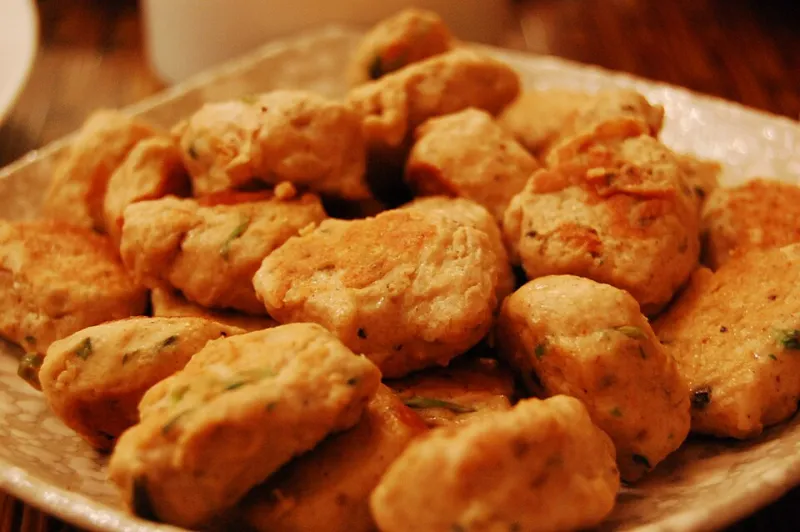
Photo: raasiel, CC BY 2.0, via Wikimedia Commons
Somewhere in Britain tonight, a food writer will use the phrase 'not authentic' about a plate of chicken balls with sweet and sour sauce. They'll mean it as a criticism. I'd like to explain why I think they're wrong, and why the history behind that glowing takeaway menu deserves a great deal more respect than it gets.
The Dish That Traveled
Start with chop suey, the dish everyone loves to mock. It almost certainly wasn't invented as a con — the likeliest story is that it grew out of Cantonese home cooking, where tossing whatever vegetables and scraps were to hand into a quick stir-fry is simply how frugal people cook. Za sui — odds and ends. Migrant cooks in nineteenth-century America and later Britain took that instinct, applied it to British ingredients, British palates and British shops, and produced something new.
That's not dilution. That's how every cuisine in history has worked. The Cornish pasty was engineered for miners. Chicken tikka masala was born in British restaurants from immigrant ingenuity. Nobody calls the pasty inauthentic for existing.
A Restaurant in Every Port Town
The Chinese food story in Britain begins with seafarers — Cantonese sailors, many from the New Territories of Hong Kong, jumping ship or settling in ports like Liverpool and London's Limehouse in the late 1800s. After the Second World War came the great wave: families from Hong Kong, often from farming villages, opening fish and chip shops and cafés before saving for their own Chinese restaurants and takeaways.
And here's the bit the 'inauthentic' crowd misses: these were people building a business in a country whose palate they had to learn from scratch. Where was the light soy sauce in 1960s Rotherham? The beansprouts? The wok? So they adapted. They deep-fried things because British customers loved batter. They invented a curry sauce — a golden, mildly sweet, entirely fictional curry — because that's what sold. They put chips on the menu because families wanted chips.
This wasn't a failure to cook 'real' Chinese food. It was a parallel cuisine, invented on the job by people who often worked sixteen-hour days, seven days a week, sending money home and putting children through school. The menu is a historical document of migration, negotiation and hustle.
Why Do We Only Respect Difficulty?
There's a snobbery that says a cuisine is only legitimate if it's the version served in, say, a Guangzhou home kitchen. But ask yourself: what is a Sunday roast, really? Roast beef cooked in the wrong climate, with root vegetables adapted to British soil, gravy built from a cuisine we half-remember from elsewhere. Food is always local. The question isn't whether a dish matches some imagined original — it's whether it means something to the people eating and making it.
And the UK-Chinese canon means a lot. It means the Friday night after a long week. It means the family celebration with a round of prawn crackers. It means the Hong Kong-born grandmother who ran the takeaway for thirty years and whose chicken ball recipe the whole street grew up on. That's not a lesser imitation of Chinese food. It's Chinese-British food, a genuine cuisine with its own history, its own classics and its own logic.
Order With Pride
None of this is a plea to stop exploring regional Chinese cooking — if you've read our menu guide, you know we're all for ordering like a regular and trying the dishes off the handwritten bit of the menu. Guangxi, Sichuan, Hunan, Cantonese home cooking: eat all of it.
But next time someone turns their nose up at curry sauce, remember what's actually in the story: sailors from Canton, post-war migrants from the New Territories, a chippy in a mill town, and a family that fed a nation a new idea of a takeaway. The chicken ball didn't fail to be Chinese. It succeeded in being British.
Pass the sweet and sour.