The Sachet Drawer: A Modest Defence of the Takeaway Condiment Packet
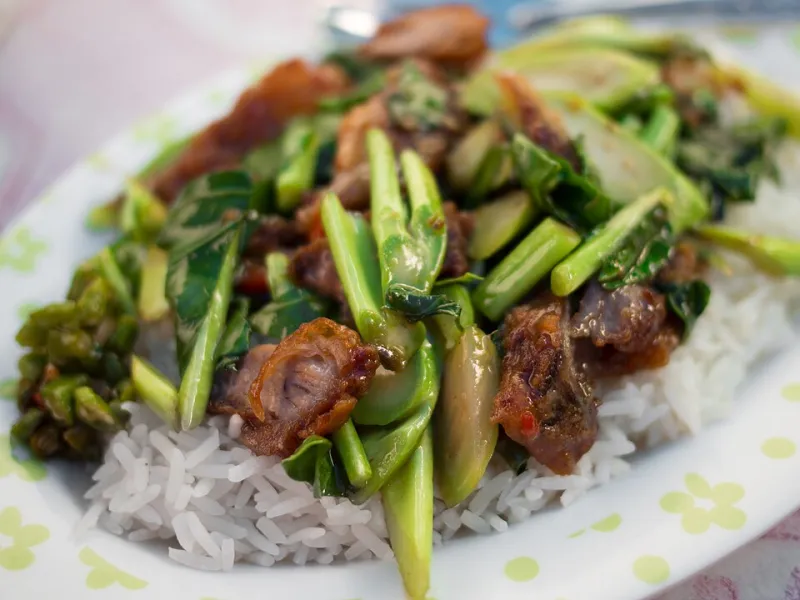
Photo: Takeaway, CC BY-SA 3.0, via Wikimedia Commons
There is a moment, about ninety seconds after the takeaway lands on the kitchen counter, when the bag gives up its second layer. Under the foil trays and the bag of prawn crackers, there is a small nest of plastic: soy sauce, vinegar, chilli, something sweet and orange, maybe a plum-coloured one if you ordered duck. Most of us tip them into a drawer and forget them. Then, halfway through the rice, we go looking.
The sachet is easy to mock. It is also, quietly, one of the most personal things a takeaway sends you. A restaurant cannot know what your kitchen is like, how much salt you like, whether you own a bottle of rice vinegar or a jar of chilli crisp. So it sends a tiny condiment kit and lets you finish the dish at home. At Shuxiang Ge, we are interested in the small rituals that make a Chinese meal feel like yours. The sachet drawer is one of them.
The drawer as an archive
Every takeaway has a house style, and the sachets are part of it. One place sends two soy sauces and one vinegar, as if it knows you are having chips. Another sends a chilli oil so dark it stains the little packet. A third sends a sweet-and-sour dip with a consistency that suggests it has been waiting for you since the 1990s. Collect enough Friday nights and the drawer becomes a slightly chaotic archive of local taste.
The sachet itself is a product of takeaway culture: a way to send flavour without sending glass. In Britain, the high-street Chinese restaurant and takeaway grew alongside the post-war convenience economy, and packaging followed. The little foil-lidded packet is not ancient. It is a practical answer to a practical question: how do you put a condiment in a bag and send it across town? The answer is not glamorous, but it works.
A field guide to the little packets
Before you squeeze, taste. Put a small dot on the corner of your plate. The sachet is a suggestion, not an instruction.
Soy sauce
Thin, salty, usually a light soy style. This is the workhorse. Use it for rice, noodles, dumplings and wontons. It is not really a chip condiment, though nobody is arresting you. If the dish already tastes seasoned, add a few drops rather than a whole packet.
Vinegar
In a British Chinese takeaway, this is often a clear vinegar, sometimes with chilli. We tend to think of vinegar as a chip-shop habit, but acidity is doing real work here: it cuts through fried food and wakes up a spring roll. A splash over noodles or a dip for anything battered is a small improvement.
Chilli oil or chilli sauce
This is the wildcard. Some packets are mild and sweet; some are genuinely hot. Taste first. Good with wontons, noodles and fried rice, especially if you add a little soy to round it out.
Sweet-and-sour dip
The neon one. Sugar, acid, a faint pineapple-ish hum. It is best as a dip for battered things, not as a pour-over. If you are having chicken balls, this is the packet that earns its place.
Plum or duck sauce
Dark, jammy, slightly star-anise-ish. Made for pancakes and duck, but also good with roast pork or a spring roll. A little goes a long way.
The small rule: plate first, packet second
Do not open five sachets at once. Squeeze a little of each onto the edge of a plate, in a neat row if you are feeling scholarly. Taste. Then decide. This sounds fussy, but it takes ten seconds and stops a good dish from becoming a puddle. It also tells you something about the restaurant: a place that sends a chilli oil with actual flavour is a place that cares about the details.
Upgrading the drawer without pretending you are a chef
The sachet is a base, not a final answer. A few small additions turn it into something better.
- Dumpling dip: soy sachet, a drop of toasted sesame oil, a pinch of sugar, sliced spring onion.
- Wonton broth shortcut: vinegar sachet, a spoon of chilli crisp, hot water, a few drops of soy. Pour over wontons.
- Leftover rice sauce: sweet-and-sour sachet, a little soy, a crushed garlic clove. Stir-fry with rice and whatever vegetables are wilting.
- Sticky wings: plum sauce sachet, a pinch of five-spice, a splash of water. Brush on roast chicken wings near the end.
- Noodle sauce: chilli sachet, a spoon of peanut butter, soy, warm water. Toss through noodles.
None of this is restaurant cooking. It is home cooking with a head start, which is what the takeaway has been offering all along.
The waste question
The sachet has a problem: it is small, plastic and easy to hoard. A drawer full of them is not a pantry; it is a slow accumulation of good intentions. Ask for fewer if you know you will not use them. Decant the ones you keep into small jars so you can see what you have. Use them within a reasonable time, and do not treat a three-year-old packet as a family heirloom. Recycling rules vary by council, so check locally rather than guessing. The sachet is not evil. The pile is.
Why the small ritual matters
A takeaway is a handover. The kitchen does the cooking; you do the last bit of seasoning. The sachet is the physical proof of that partnership. It is also a record of what British Chinese takeaway customers have asked for over the years: a dip, a splash, a bit of heat, a bit of sweet. The fragrant house is built from small things, and this is one of the smallest.
So next Friday, before the drawer swallows them, give the sachets a plate, a spoon and a moment. Taste one. Pair it properly. Upgrade it if you like. The humble packet has more to say than it gets credit for.