Pass the Ladle, Not the Plate: Hosting a Chinese Hotpot Night in a British Kitchen
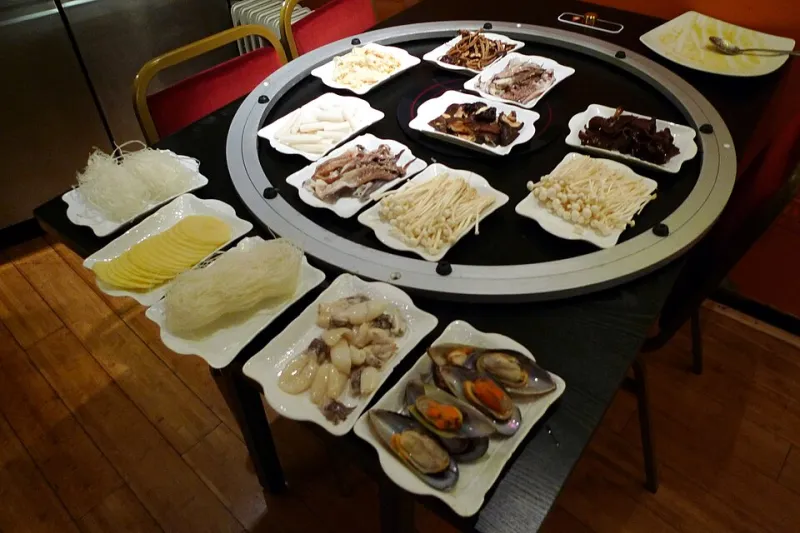
Photo: Ewan Munro from London, UK, CC BY-SA 2.0, via Wikimedia Commons
There is a particular British instinct, when friends come for dinner, to have everything finished before they arrive. The lasagne is assembled, the plates are warmed, the serving spoon is positioned at a reassuring angle. Hotpot asks you to do the opposite. It asks you to put a pot of simmering broth in the middle of the table, arrange a small mountain of raw ingredients around it, and trust your guests to cook their own dinner while you sit down with them. It is, frankly, a better way to host in winter.
At Shuxiang Ge we spend a lot of time thinking about the sociable side of Chinese food — the dishes that make a table feel like a table rather than a service counter. Hotpot is the ultimate example. It is common across China, from Sichuan's fiery red broths to the lamb-and-copper-pot traditions of Beijing and the gentle seafood hotpots of the south. The details change, but the rhythm is the same: a pot that keeps talking, a ladle that keeps moving, and a meal that unfolds rather than arrives.
Start with the pot, not the recipe
For a first hotpot night at home, you do not need a specialist copper vessel. A wide, shallow saucepan or a large sauté pan works well, especially if it has a lid. What you do need is a heat source at the table: a portable induction hob is the most practical option in a British kitchen, and many models have a low enough setting to keep a gentle simmer without turning the broth into a volcanic roar. Put it on a heatproof mat, keep the cable away from wandering elbows, and make sure everyone can reach the pot without leaning over a candle or a wine glass.
If you are feeding more than four people, consider a split-pot insert or two smaller pots side by side. One can be mild and mushroomy; the other can carry the chilli oil. This is not just political diplomacy for heat-shy guests. It also means the broth stays interesting for longer.
Choose a broth you actually want to drink
Hotpot broth is not just cooking water. It seasons everything that passes through it, and by the end of the night it has become a soup worth ladling into a bowl with a few noodles. For a beginner, keep it simple.
A mild base can be made with chicken or vegetable stock, a few slices of ginger, spring onion whites, a dried shiitake or two, and a splash of Shaoxing wine if you have it. For a Sichuan-style broth, add chilli bean paste, a little Sichuan peppercorn, star anise and a spoonful of chilli oil; let it simmer for ten minutes so the flavours settle. A tomato-based broth is another gentle option and works well with seafood. Avoid over-salting at the start — the broth will reduce as the evening goes on, and the dipping sauces will bring their own salt.
Build a sauce bar, not a sauce
If broth is the engine of hotpot, the dipping sauce is the personality. Set out small bowls and let people mix their own. The classic British-friendly starting point is a spoon of sesame paste or tahini loosened with light soy sauce and a little hot broth, then finished with black vinegar, chopped garlic, spring onion, coriander and chilli oil. A little crushed peanut adds texture. Soy sauce alone is too sharp; the sesame and vinegar round it out.
This is also where a host can be quietly generous. Put out more bowls than you think you need, label nothing, and resist the urge to make everyone's sauce for them. The pleasure is in the tinkering.
Shop the high street, then fill the gaps
You do not need a trip to a specialist supermarket to host a respectable hotpot. A good butcher can slice beef or pork thinly — ask for it partly frozen and cut against the grain — or you can freeze a piece of steak for twenty minutes at home and slice it yourself. Chicken thigh slices, frozen raw prawns, firm tofu, tofu puffs, fishballs and frozen dumplings are all widely available. Supermarket mushrooms, pak choi, Chinese cabbage, spinach, carrots and spring onions will do the vegetable side admirably.
For the more specific bits — enoki mushrooms, wide sweet potato noodles, frozen fish tofu, Chinese sesame paste — a local Asian grocer is worth the detour. Buy less than you think. Hotpot looks abundant even when the plates are modest, and leftover raw ingredients are less appealing the next day.
Pace the meal like a conversation
This is the part that separates a good hotpot from a chaotic one. Do not tip everything in at once. Start with aromatics and mushrooms, which build the broth. Add sturdy vegetables — carrot, cabbage, tofu puffs — and let them soften. Then cook proteins in small batches, giving each one enough time in the simmering broth. Thin slices of beef take seconds; prawns need to turn opaque and firm; frozen dumplings need longer. Keep a slotted spoon or small strainer for retrieving things, and give each guest their own small bowl rather than expecting everyone to fish from the same bubbling centre with the same chopsticks.
Food safety matters here, but it does not need to be solemn. Use separate chopsticks or tongs for raw meat and seafood, keep the broth at a steady simmer rather than a lukewarm pause, and make sure shellfish is properly cooked before it reaches a bowl. A cold pot at the end of the night is a disappointment; a pot that has been allowed to go cold mid-meal is a risk. If the broth drops below a gentle simmer, turn the heat up before adding the next round.
Finish with noodles, then tea
When the table starts to slow down, add a handful of noodles or a few dumplings and let them cook in the broth that has been gathering flavour all evening. Ladle out small bowls of soup. Put a pot of jasmine or oolong tea on the table. The meal ends not with a heavy pudding but with a warm, savoury sigh.
Hotpot is a useful corrective to the British habit of plating everything in advance. It says that dinner is not a performance to be completed before the guests arrive. It is the thing that happens while everyone is talking, reaching, ladling and occasionally losing a mushroom to the depths. All you have to do is keep the pot warm and pass the ladle.